
The Gauntlet Lands in Amazon's Top SAT Releases, Fall Registration Opens, and a Few Stories Worth Knowing

Dear MJTP families,
A lot has happened this month, both in our corner of the test prep world and in the broader landscape of college admissions. I want to share where we are, and then walk through a few news stories that families should be thinking about.
But first, let's share more great student news!
Another Positive Outcome from the May SAT!
Zach took the May SAT and pulled a 770 in Reading and Writing, up from 730 on his previous sitting. He used the Gauntlet online to drill consistently in the weeks leading up to test day. A forty-point jump on a section he had already scored well on is not luck. It is the kind of gain that comes from disciplined daily reps on the right material. Congrats to Zach!
The Gauntlet Update
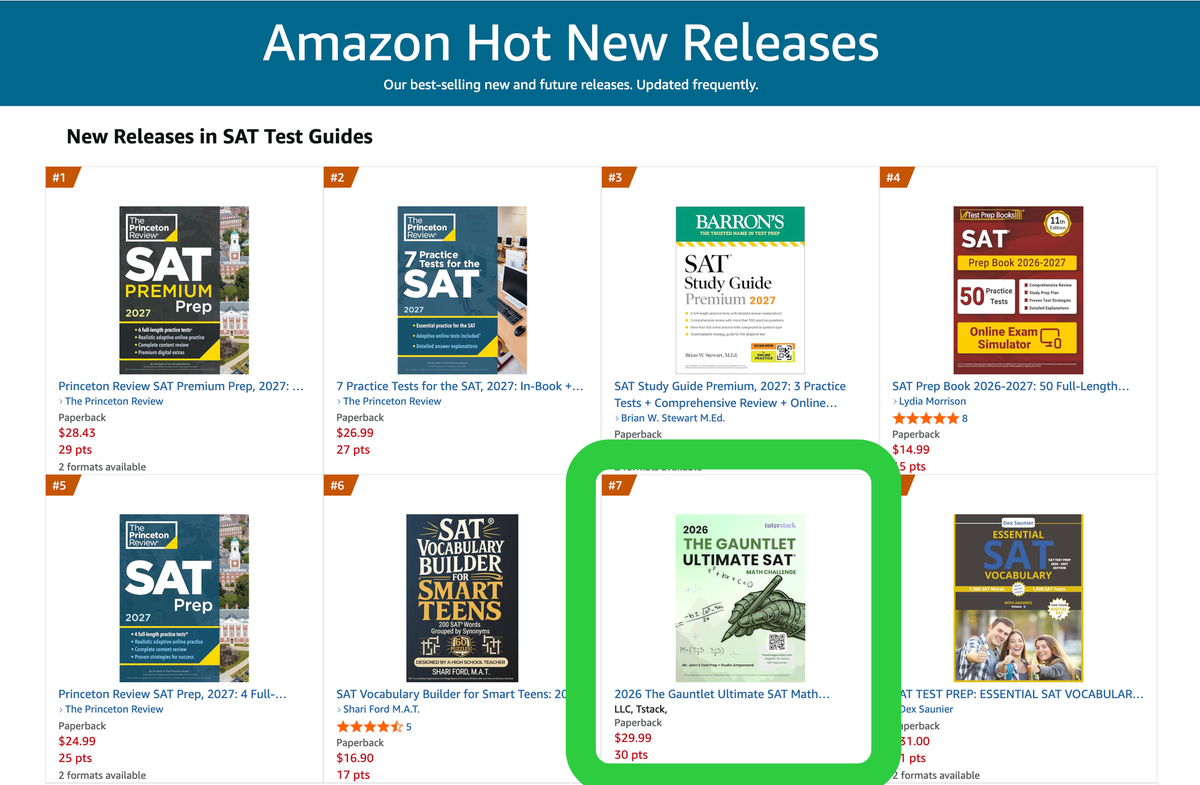
The 2026 edition of The Gauntlet Ultimate SAT Math Challenge is now live on Amazon, and it has landed in the top tier of New Releases in SAT Test Guides. As of this week, it is sitting at #7, alongside titles from Barron's and The Princeton Review, and ahead of Kaplan. That is good company for a book that did not have a marketing department behind it. It tells me that families are looking for material that takes the digital SAT seriously, and that the work we have put into the question writing is being recognized.
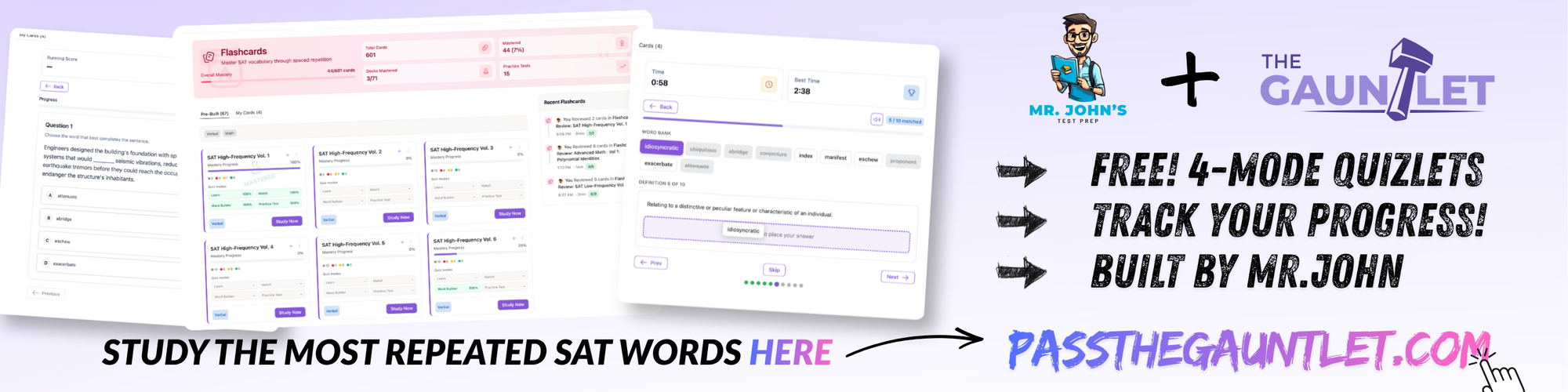
PasstheGauntlet.com Updates
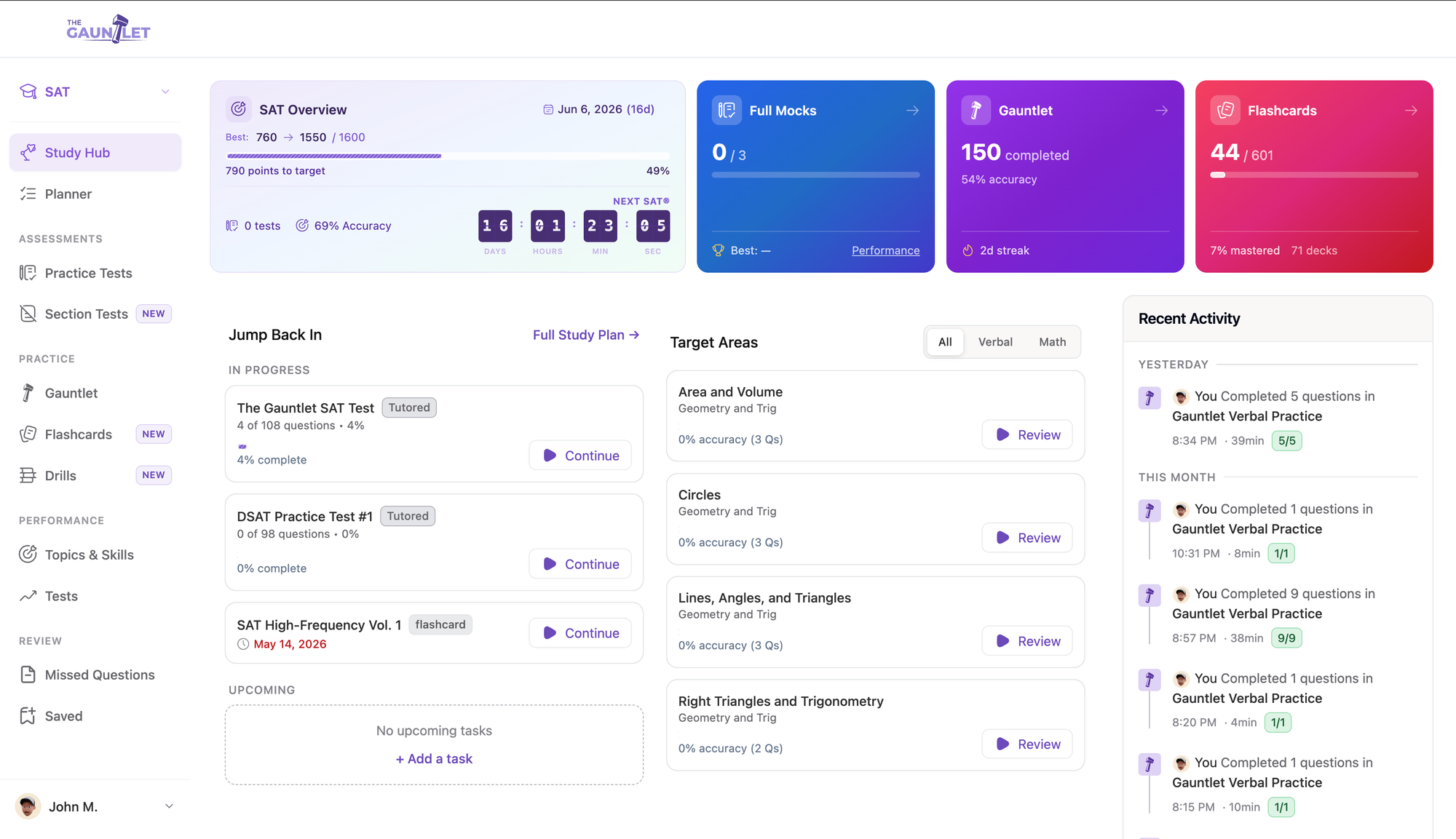
Many more updates are on the way. We've completely revamped the user interface for a better user experience, better navigation, and clearer pathways to your success.
Drills are coming next, organized by skill so that students can target the specific question types where they are missing points. Section tests are also in development, built to mirror the rhythm and pacing of an actual digital section rather than asking students to sit a full-length test every time. Both will be released through our online platform, with many being loaded over the weekend.
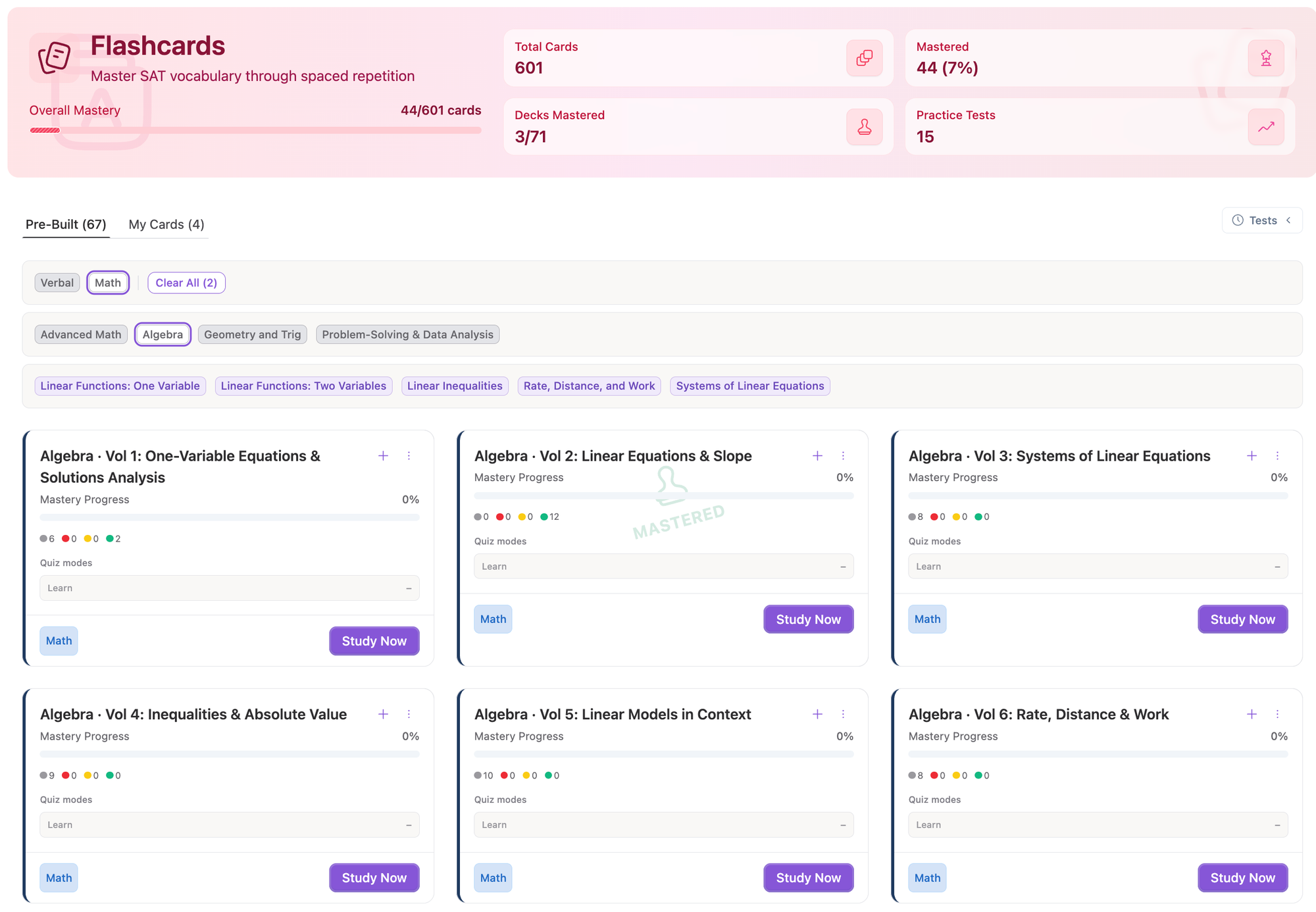
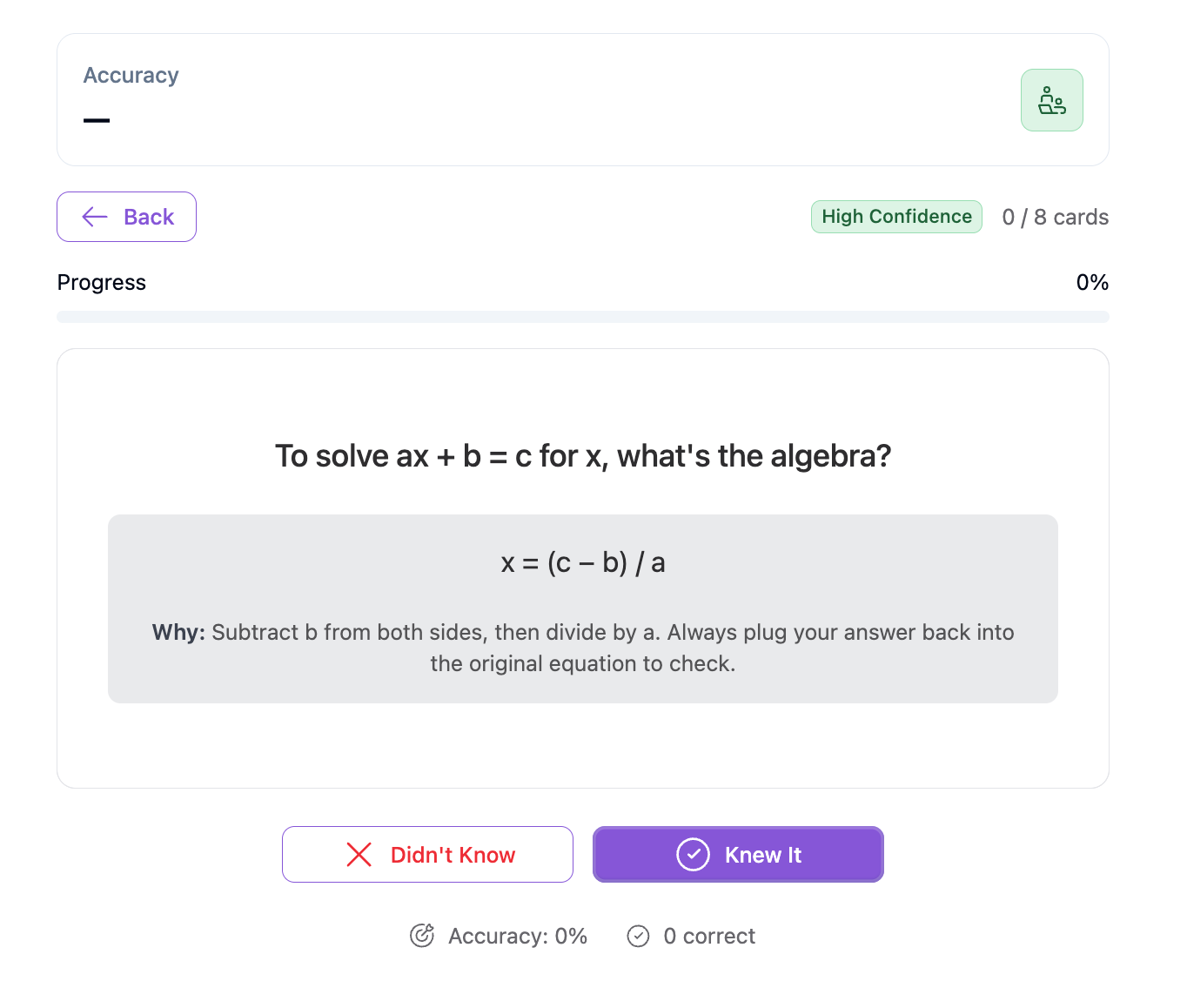
We have also rolled out new math flashcards covering every topic and skill on the digital SAT math section. These are designed for daily review. Five minutes a day with the right deck closes more gaps than an hour of unfocused practice. And best of all, these are 100% free.
College Board has opened fall 2026 registration
The fall schedule is now confirmed, and all five test dates are open for registration:
Juniors who are using the summer to prep should be looking at August, September, or October. Seniors targeting early applications should not let September pass without a plan in place.
Princeton Reverses 133 Years of Tradition
Earlier this month, the Princeton faculty voted to proctor all in-person examinations beginning July 1, ending an honor system that had been in place since 1893. The reason cited in the policy proposal was the difficulty of detecting AI-assisted cheating without a proctor in the room. Stanford passed a similar reform earlier this year.
This is the most consequential institutional acknowledgment to date that the honor-code model has not held up against generative AI. Families should read the signal: the universities themselves are tightening the assessment environment.
Harvard caps A grades at twenty percent
On May 20, the Harvard Faculty of Arts and Sciences voted to cap the number of A grades in any course at roughly twenty percent of enrolled students. The policy takes effect in fall 2027 and is a direct response to years of grade inflation that had pushed two-thirds of grades at the college into the straight-A range. The faculty also voted to use an internal percentile rank, rather than GPA, to determine honors and prizes.
Taken together with the Princeton vote, these two stories point in the same direction. Elite institutions are quietly rebuilding the assessment infrastructure that grade inflation and AI had eroded. And when GPAs become noisier signals, standardized test scores become sharper ones. That is worth keeping in mind as families think about whether to invest in serious test prep at all.
One more story parents should read
The Wall Street Journal published a piece this week titled Parents Are Fuming About Other Peoples' Kids Getting Extra Time on the SAT. The reporting describes families paying upwards of $10,000 for neuropsychological evaluations to secure extended-time accommodations, and in some cases finding doctors willing to support unusual diagnoses in support of those requests. The concentration of extended-time accommodations in wealthy school districts has continued to climb.
I found this story interesting because I work daily with students who have accommodations. I teach full-time in the Learning Resource Center at one of the world's most well-known private schools. As someone who works daily with students with documented disabilities, I completely defend them having a right to accommodations. Many of my students are working harder than anyone realizes to keep up.
I've worked with severely dyslexic students, students with extreme ADHD, and many other hurdles. The article is not about them. It is about a smaller group of families purportedly gaming a system that was designed in good faith. The damage of that gaming falls hardest on the students who legitimately need the help, because their accommodations now carry the suspicion that the article documents.
What I tell families when this comes up: the only durable advantage in this process is the work. Honest daily practice on the right material and strategies moves scores. There is no shortcut that does not eventually get audited. And my past students with severe dyslexia and ADHD who've experienced 90-140 point gains can attest to this. Hard work still pays off.
Summer is nigh! Let's work towards August. If you know a family who can benefit from SAT tutoring, essay writing, executive function coaching, or the Gauntlet, please pass it along.
Best,
John