A Weekend at Sewanee, and What I've Been Thinking About Since
Good morning, MJTP families.
This weekend I drove to Sewanee, Tennessee, with my wife and son.
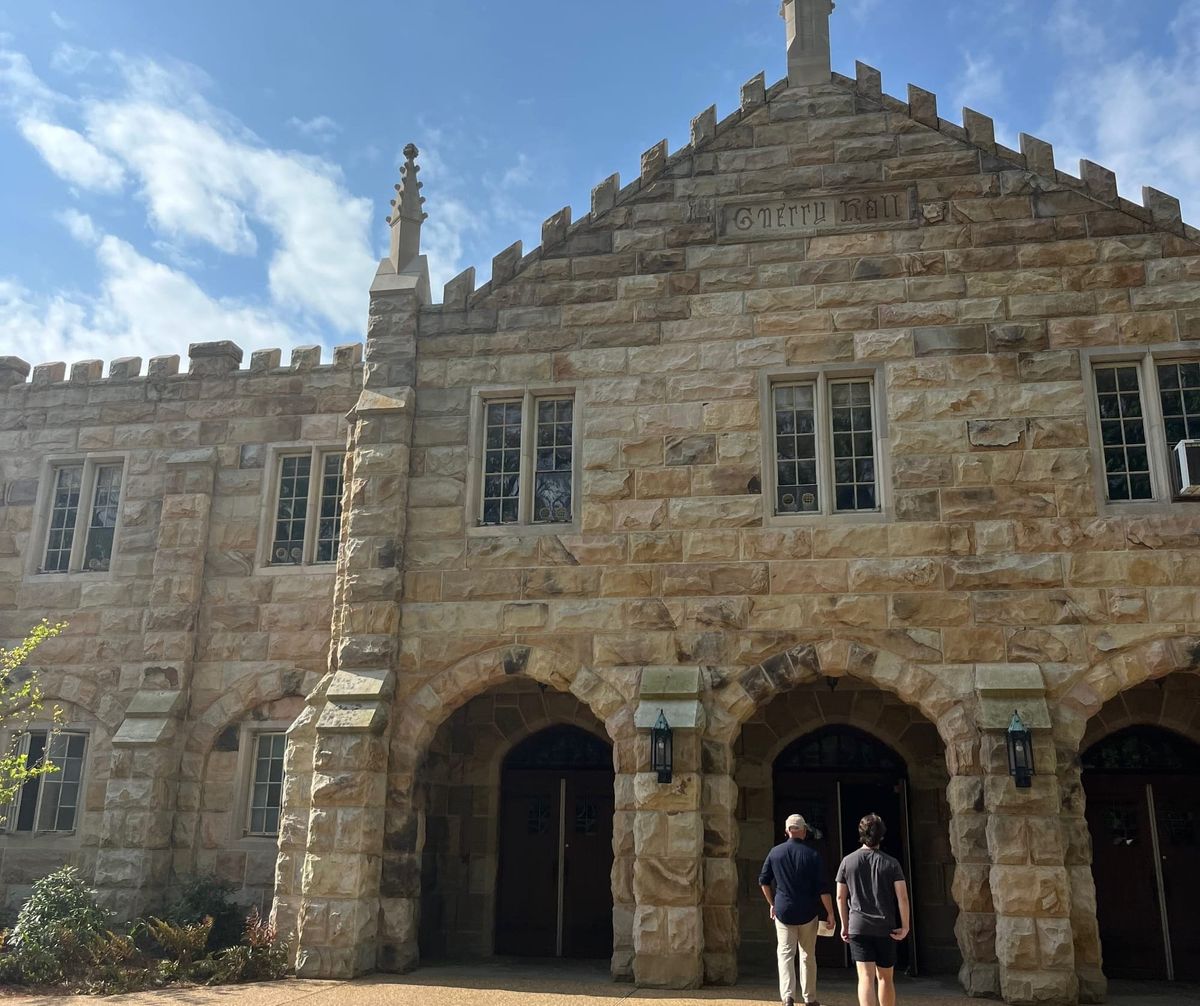
The University of the South sits on top of a mountain about forty-five minutes outside Chattanooga, and if you have never been there, the first thing I'd say is that every photograph you have seen undersells it. Stone buildings the color of wet sand. Gothic arches. Oaks that have been standing longer than the school has. Fog that rolls in and then out again before you can decide whether you saw it. People call it one of the most beautiful campuses in the world. Princeton Review calls it THE most beautiful campus.
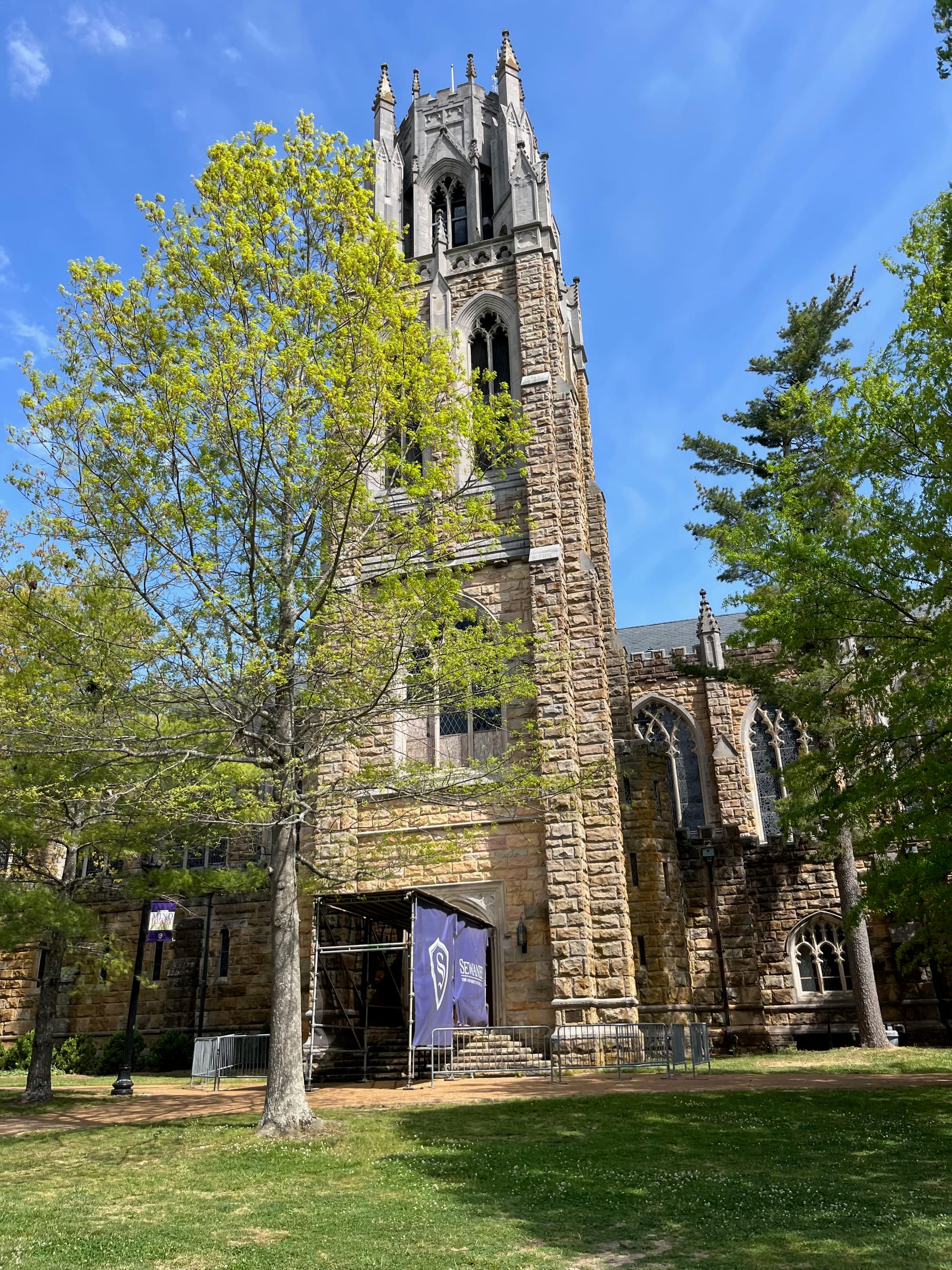
I took Jack there for a visit and a tour. He is a junior, so we are in that season of life where the conversations turn toward what comes next. We walked the quad. We sat through the admissions talk. We had a delicious meal in the Southern-Living-Magazine-praised McClurg Dining Hall. It all felt eerily similar to Hogwarts, to be honest, especially with the "Order of the Gownsmen" in all it's glory.
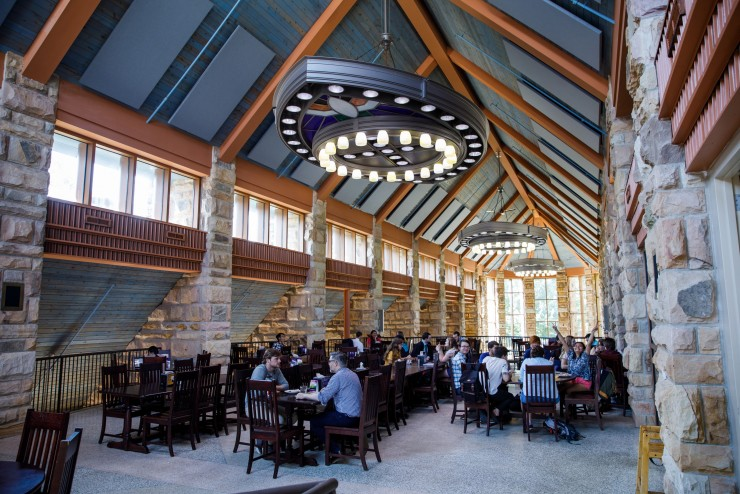
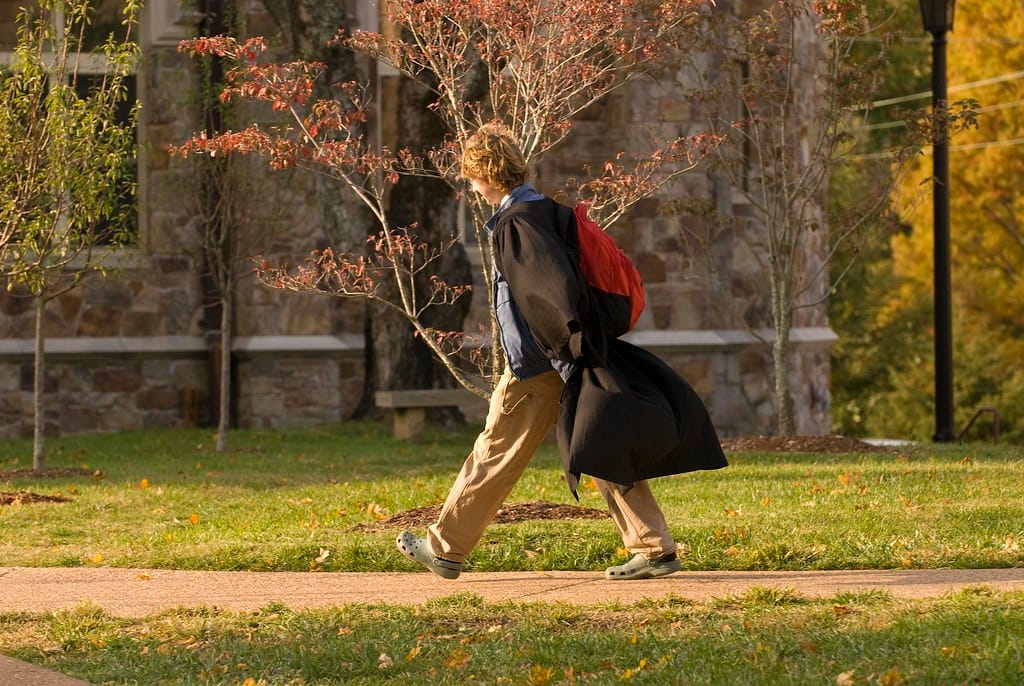
Sewanee McClurg Dining Hall and student walking about campus with gown
The tour guide told us something I had not known. There are supposed to be tunnels under parts of the campus, built in the early 1900s. Why they were built, no one knows. In fact, she said it was all a bit of mystery that not many students even know about. Some apparently still exist. I loved hearing it. One of the things an old campus gives you is the sense that you are joining a story that was there before you arrived and will be there after you leave. It's hard to put a price on things like that.
Why this one matters to me
I grew up in Chattanooga and went to McCallie. I played on the golf team. We played a match on Monteagle Mountain against the local Sewanee private school, St. Andrews. Later, I visited Sewanee for the same reason Jack and I were visiting this weekend. I came very close to going there. In the end I chose Birmingham-Southern College instead.
Birmingham-Southern closed in May of 2024. My alma mater is gone.
What's happening to small colleges
I have been thinking about that closure for a while now, and a report that came out last week from Yale put this into focus.
The Report of the Committee on Trust in Higher Education is a year in the making, commissioned by Yale's own president, submitted on April 10. It is striking because it is not a think piece. It is Yale, on the record, saying that public trust in higher education has eroded and that universities are substantially responsible for it. The committee points at cost. At admissions practices that are hard to explain. At grade inflation. At self-censorship on campus.
If Yale, with one of the largest endowments in American higher education, feels the need to say this out loud, you can imagine what the ground looks like underneath the schools that don't have that kind of cushion.
The same week the Yale report dropped, Hampshire College announced it was closing. Enrollment had fallen from 842 students in fall 2024 to 747 the following year with twenty-one million dollars in bond debt they could not refinance and a land sale that did not happen. A five-year turnaround plan launched in 2019 fell well short of what was needed. Ken Burns, who graduated from Hampshire in 1975, called it an incalculable loss. Bloomberg reported Hampshire is at least the sixth college this year to announce a closure or a forced acquisition.
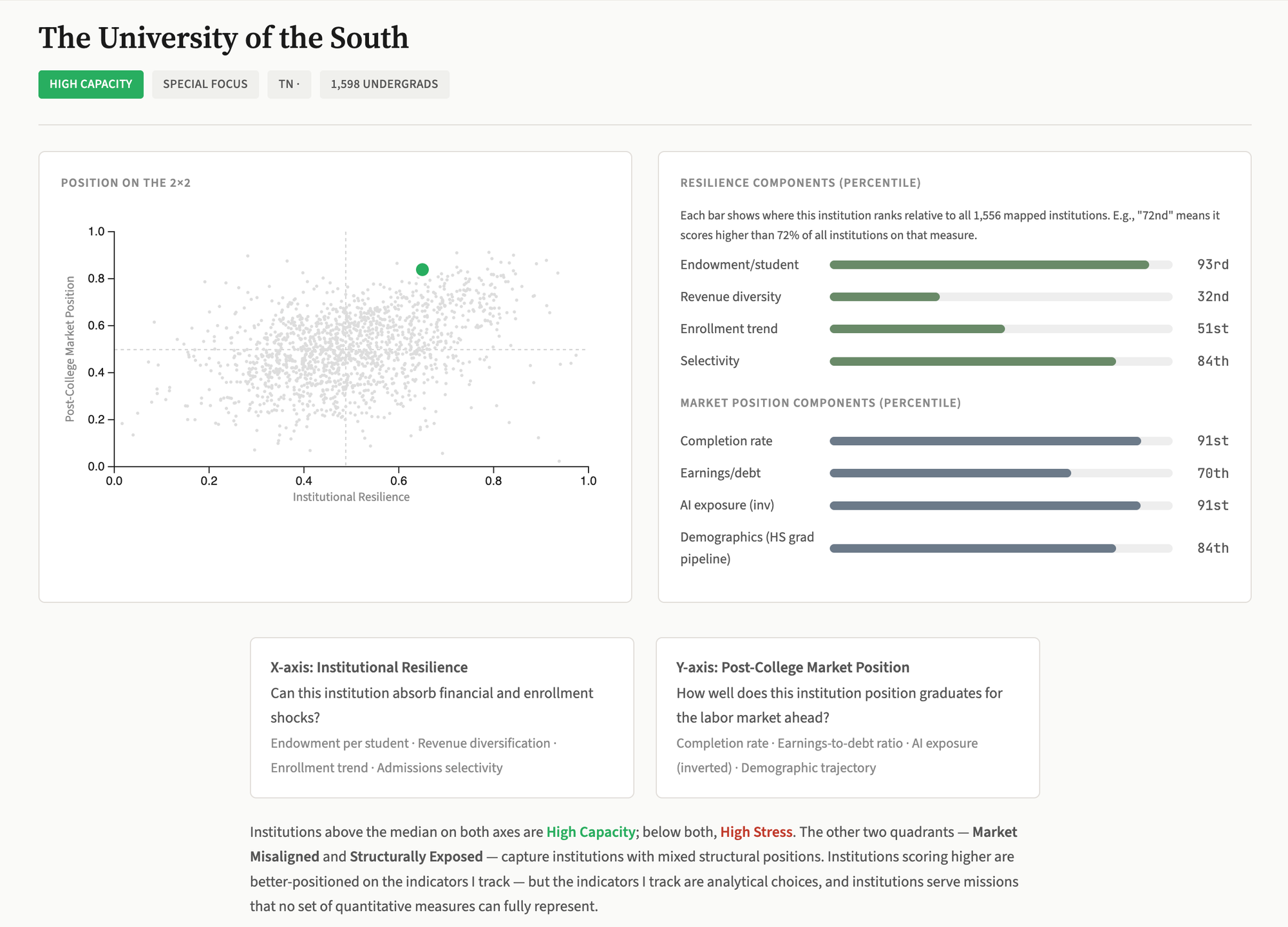
If you want to see the shape of this across the whole sector, Kyle Saunders at Colorado State has built a tool that is worth your time: a structural map of 1,556 U.S. four-year colleges and universities, scored on institutional resilience and on how well graduates are positioned for the labor market ahead. The data comes from IPEDS, the College Scorecard, WICHE demographic projections, and the Anthropic Economic Index. You can look up any individual institution and see where it sits. Thirty-seven percent of the schools on his map are both shrinking and structurally stressed. Half of all baccalaureate institutions fall in his "High Stress" quadrant.
It's not a prediction about which schools will close. But it is a serious, transparent attempt to describe, with real federal data, the pressure these institutions are under.
What the Khanmigo obituary says
In addition to all of this, my test prep colleagues shared a piece from Dan Meyer this week with the headline "RIP Khanmigo & Edtech Industry Dreams of AI Tutors."
If you've never heard of Khanmigo, it is the AI tutor Sal Khan launched three years ago at a TED talk, predicting it would be the biggest positive transformation in the history of education. Microsoft sponsored licenses for teachers in 49 countries. Gates Foundation grants flowed. A single Florida foundation committed two million dollars so that one county's schools could buy seats.
Sal Khan never goes without a steady river of subsidy to fund his ideas.
Meyer's piece walks through what happened next. Khan Academy's own chief academic officer has gone on the record saying she is not seeing the revolution in education they expected. Usage has been weak. The chatbot has been reworked so that it now pops up and asks "Need help?" one second after the page loads, because students were not seeking it out on their own. Sal Khan himself has arrived at what Meyer calls acceptance. Khan now says, "I think our biggest lever is really investing in the human systems," with technology playing a supporting rather than a leading role. Perhaps this why he launched Schoolhouse.
I want to be careful here. I am not writing this to "hate" on Khan Academy, which has done great and positive things in the world of education. I am writing it because the admission at the center of that story matters.
The biggest lever is the human.
If the best-funded, best-connected AI tutoring project in the world has concluded that technology plays a supporting role and the human systems do the actual work, then we have an answer, sitting right in front of us, to the question of what education is supposed to be. It is not software delivering content to a student. It is a person helping another person do hard things.
A lunch conversation last Wednesday
I had lunch Wednesday with a few colleagues, and we got on this subject. What is next for education? What actually works, when the AI wave fully lands, and the demographic cliff arrives, and the small schools keep closing?
I kept coming back to an idea I have been playing with for a while. What if we offered a kind of "renaissance man" course sequence for boys, and perhaps girls, too — classics, rhetoric, how to do hard things, how to work with your hands, how to think, how to play an instrument? Not as a gimmick. As a serious counterweight to what happens when a young man spends his adolescence optimizing for the checkable things.
My own curiosity has pulled me in a lot of different directions over the years. I can work on a diesel engine. I am also a certified sommelier. I play the guitar, thanks to my father. I speak Spanish, thanks to traveling abroad. None of those things was on any checklist someone handed me. They came from the same instinct — wanting to understand how the world is put together, one piece at a time. The classical idea of a liberal arts education is that a person should be able to do more than one thing, and should be able to think about why they are doing it. That idea doesn't go out of style.
Sewanee is already doing this
Which brings me back to the mountain.
Here is what the admissions tour mentioned, and what held up when I went back and checked.
Students at Sewanee run their own fire department. Not a mascot of a fire department — an actual fire department that responds to actual calls, staffed by students who train and certify and get woken up at three in the morning when something happens on the mountain. These are eighteen- and nineteen-year-olds learning to be the people their community calls when things go wrong.
Study abroad is built into the tuition model. If a student wants to spend a term somewhere else in the world, the cost is the cost. It is not a premium add-on.
There is an airport a few minutes from campus, and students can earn a private pilot's license while they are enrolled. Flight training, in college, on a mountaintop in Tennessee is an amazing value when you consider how expensive and difficult a pilot's license can be.
The research faculty is nationally known — not by accident, but because the school has quietly decided that a small liberal arts college in the South can attract serious scholars, and that undergraduates should sit across a seminar table from them.
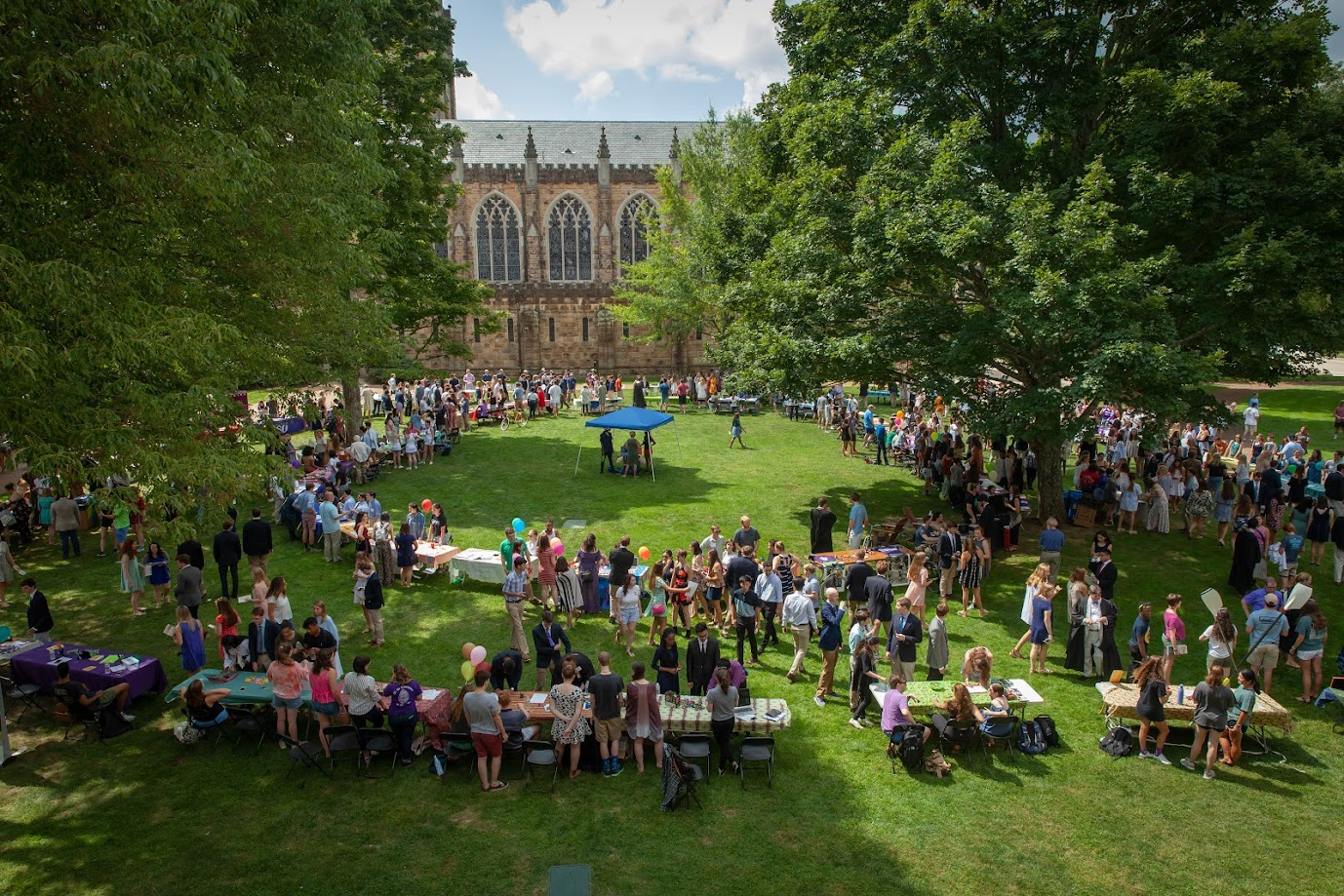
To be honest, my son Jack didn't feel the "vibe" he wanted at Sewanee, and this isn't an advertisement for them. I mean it as a proxy for what students should expect out of the next level of education: having been inside a real community, having done things that have consequences, having been around people who take ideas seriously and have lived long enough to know what ideas are for.
That is at least part of the answer to the question Meyer's Khanmigo obituary leaves open. A chatbot cannot do any of this. A chatbot cannot put a nineteen-year-old on a fire truck or in a cockpit or in a small seminar with a professor who has been thinking about one thing for thirty years.
What I want Jack to know
The current landscape is genuinely uncertain. AI is going to change a lot of things, including what college is for and what it costs and which institutions are able to stay open. The Yale report, the Hampshire closure, the Saunders map, and the Khanmigo obituary are all describing different pieces of the same large picture. The signal I take from all four, together, is this:
The schools that will matter in the next twenty years are the ones that put students inside real communities doing real things with real people. Everything else is going to get commoditized or automated. The human part is what is left, and the schools that have been quietly building the human part for a century are in a stronger position than almost anyone realizes.
I do not know yet where Jack will end up. He has good options. He is doing the work. But I left Sewanee this weekend with a feeling I have not had on many college visits, which is that the place I was walking through already knows what it is, has known for a long time, and is not panicked about any of this.
That is worth something.
For the families in the newsletter
If you have a junior at home, the May and June SAT dates are coming up fast. Emma and I are running our Spring SAT Bootcamp ahead of those test dates — math, reading and writing, timing, the whole picture. If you have been wondering whether your student is on track for the score they need, now is the window.
For students sitting for the AP Language and Composition exam in May, I also have AP Lang tutoring openings. If you want your student walking into that exam knowing how to handle the MCQ, reach out and we will get them ready.
Reply to this email or head to mrjohnstestprep.com to get on the schedule.
Thanks for reading. More soon.
— John